It started quietly, as most viral things do — with two numbers. “Six seven.” Teenagers said it with a grin, a half-shrug, or a flick of the hands, like a secret handshake that adults couldn’t quite decode. When one curious adult asked what it meant, the teens laughed and said, “It doesn’t mean anything.”
But in that non-answer lies the heart of modern communication. “6-7” is more than a meaningless phrase — it’s a linguistic gesture, a subtle signal of belonging in an age where identity often forms online. The numbers themselves hold no inherent message. What matters is the shared performance of saying them.
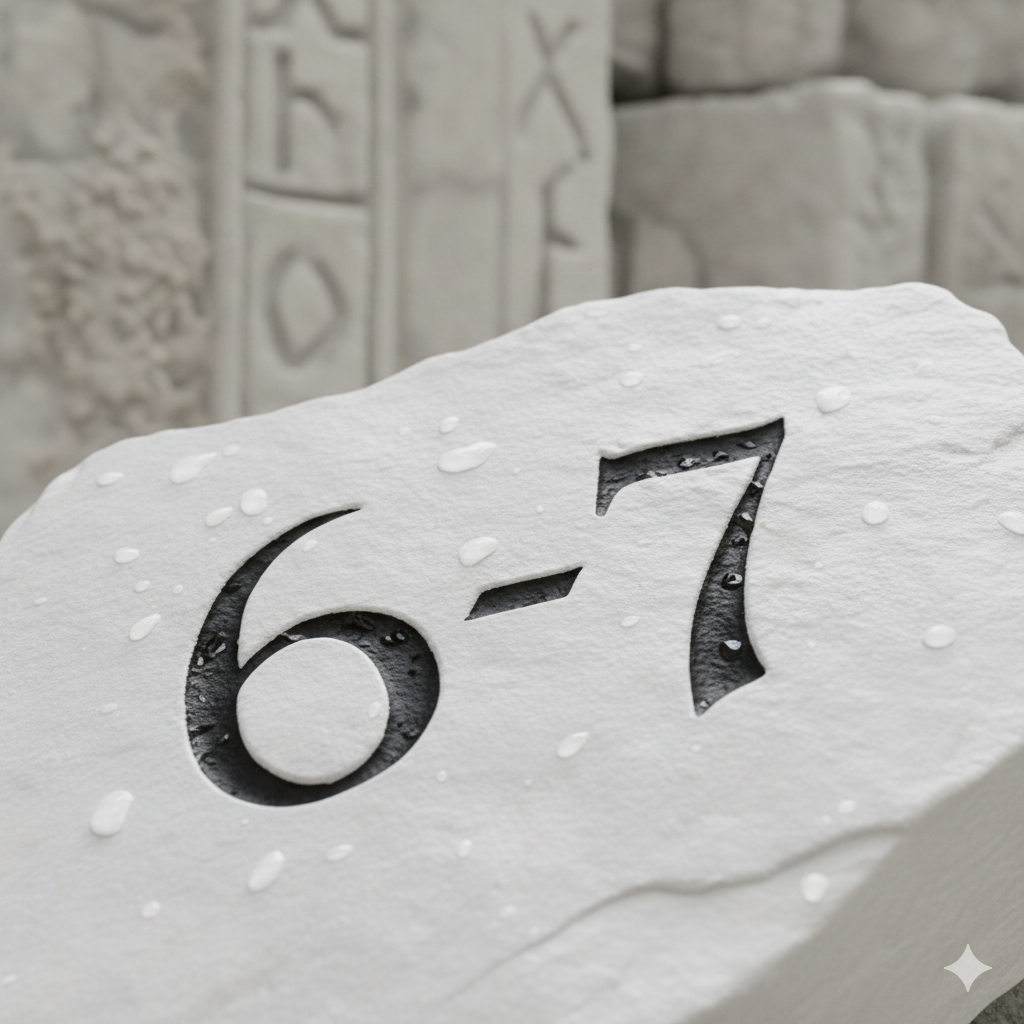
Linguistic Gesture and Social Bonding
When young people say “6-7,” they’re not trying to convey information — they’re demonstrating participation. In earlier generations, slang words had clear definitions: “rad” meant good, “bogus” meant bad. But “6-7” operates differently. It’s not about what it means; it’s about who uses it.
Language here becomes a tool of social bonding. Saying “6-7” places you inside a small, self-selected circle of understanding. To those outside the group, it sounds absurd. To those inside, it affirms connection. It’s proof you’re tuned into the same cultural frequency — a form of emotional shorthand that bypasses explanation.
Viral Spread: From TikTok to the World
The phrase “6-7” first gained traction through a short TikTok sound referencing a basketball player’s height. Its rhythm made it catchy; its lack of definition made it adaptable. Within days, it evolved from a random audio clip into a global in-joke.
Social media thrives on fragments that are easy to mimic but hard to define. The vaguer the meaning, the more flexible it becomes. “6-7” could mean solidarity, irony, confidence, or nothing at all — and that open-endedness made it irresistible. It began appearing in captions, remixes, and comment threads, forming an invisible network of users who all “got it,” even if none of them could explain it.
Inside-Out Identity: Inclusion Without Explanation
Adults who tried using “6-7” often met polite smiles — the kind that acknowledge good intentions but mark clear boundaries. That subtle exchange captures something fundamental about generational language. Slang doesn’t just communicate; it defines who belongs.
This boundary isn’t drawn from exclusion but from identity. By creating expressions that resist adult understanding, young people carve out space for autonomy. “6-7” becomes a password to temporary belonging, a phrase that allows them to build micro-cultures within the larger noise of the internet.
The Psychology Behind Nonsense: Why Meaningless Words Matter
If “6-7” doesn’t mean anything, why does it matter so much? Shared nonsense fulfills a real emotional function. It builds trust and reinforces community without the burden of logic. Laughing together over something meaningless still produces the same sense of closeness as deep conversation.
Such micro-trends often surface during times of digital fatigue. After months of constant exposure to information and commentary online, a phrase that asks nothing of you — that invites you to join without overthinking — feels refreshing. “6-7” spreads precisely because it is simple, playful, and free of explanation.
Final Thoughts : What “6-7” Teaches Us About Language and Connection
“The Secret Power of 6-7” isn’t really about numbers at all. It’s about how people invent new ways to feel seen and connected in a fragmented world. For a brief moment, those two numbers united strangers across continents through humor, rhythm, and shared curiosity.
Source Mapping:
| Section in the Article | Based on Which Part of Your Source |
|---|---|
| Introduction: What Does “6-7” Really Mean? | Maggie Rowe, “The Secret Power of 6-7,” Psychology Today (2025) — introduction describing nieces, chant, and the ambiguity of meaning. |
| Linguistic Gesture and Social Bonding | Rowe’s reflection that the phrase signifies participation and belonging rather than literal meaning. |
| Viral Spread: From TikTok to the World | Robert Bartholomew, “What’s Behind the 6-7 Fad,” Psychology Today (2025) — coverage of the trend’s TikTok origins and viral spread. |
| Inside-Out Identity: Inclusion Without Explanation | Rowe’s anecdote about trying the phrase herself and observing its role in generational identity boundaries. |
| The Psychology Behind Nonsense | Bartholomew’s analysis of the psychological relief and bonding created by collective nonsense during digital overload. |
Pingback: Showing Up for Yourself: A Deep Dive - Mental Age Test
Pingback: The Existential Load: What Dads Carry That No One Sees - Mental Age Test
Pingback: 10 foods that strengthen memory and keep your brain sharp - Mental Age Test